Description
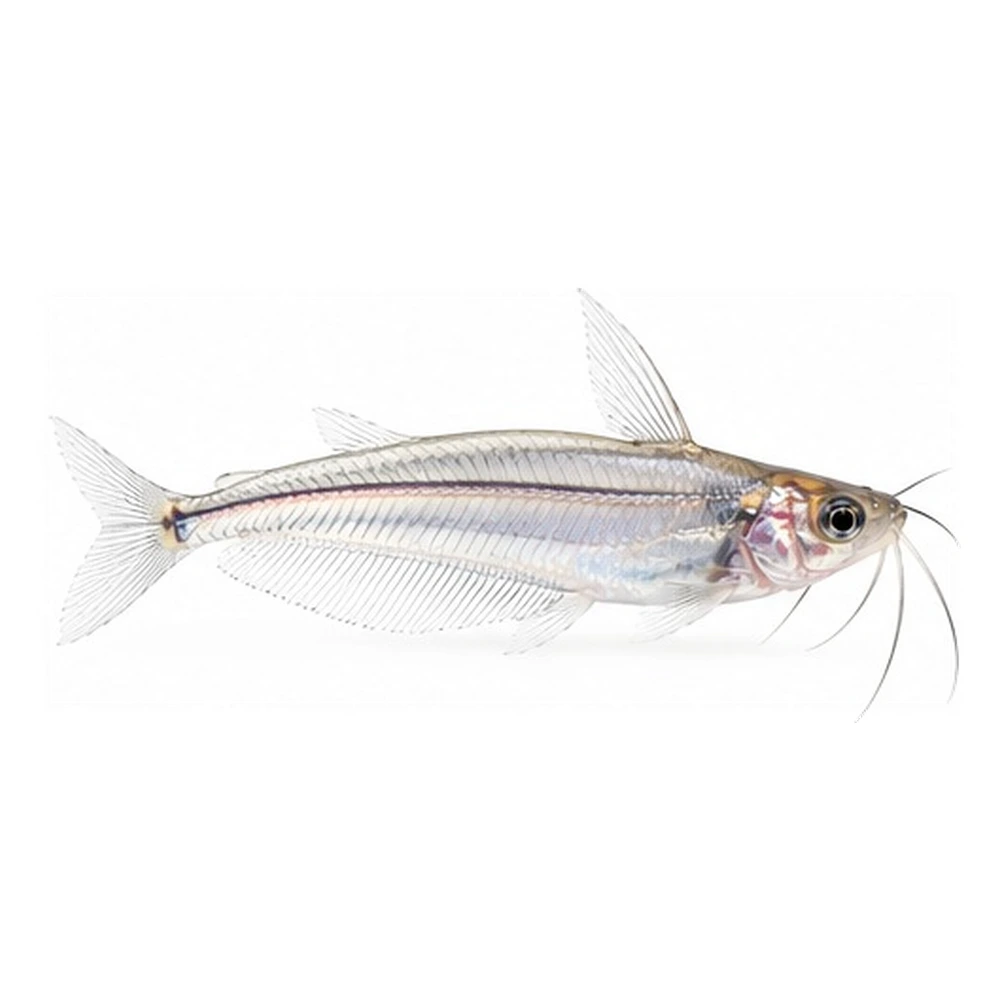
Quick answer: glass catfish are transparent schooling catfish sold at 6 to 8.5 cm. The trade name covers more than one species, usually Kryptopterus vitreolus or an Ompok species, so identity is confirmed per batch before a quotation is issued.
The appeal is obvious and slightly strange: a fish with no visible body, just a skeleton and a swim bladder moving through the water. It is also a fish that punishes poor handling, which is why the trade treats it as intermediate rather than beginner.
Identification and the species question
The body is transparent with a faint silver sheen along the flank, a small dorsal fin and long barbels. Size and body depth differ between Kryptopterus and Ompok, and so does adult size.
That matters. A retailer labelling the fish should know which one is in the tank, and a buyer planning a tank should know how large it will grow. We state the identity on the quotation rather than letting the trade name decide.
Water parameters
24 to 28 degrees Celsius, pH 6.5 to 7.2, soft and slightly acidic water with gentle flow. They are sensitive to abrupt changes, so acclimation matters more than for armoured catfish. Dim light suits them and reduces stress.
Behaviour
They school in midwater and hover almost motionless when settled. Singles hide and fade. Groups of six or more behave completely differently, which is the version a customer should see in the shop.
They are peaceful and cannot defend themselves, so tank mates must be calm. Anything that nips fins or harasses a slow moving fish will damage them.
Packing and transit
No scales means little protection. Fish are fasted, bagged in oxygen and packed at conservative density with clean water. Short routes are preferred over cheap ones, because losses on this species climb quickly with time in the bag.
Ordering
Send the size, quantity and destination, and say whether a specific scientific name is required. We confirm the batch identity, availability, packing and delivery terms.
Why the fish is transparent
The body lacks the dense muscle and pigment that hide the skeleton in other fish, so the spine and swim bladder sit in plain view. That is a genuine curiosity and a strong selling point in conversation, but it also means the fish has very little protection against rough handling or nipping tank mates. The transparency is the product and the vulnerability at the same time.
Frequently asked questions
Which species are your glass catfish?
Either Kryptopterus vitreolus or an Ompok species, confirmed on the quotation for the batch you are buying.
Are glass catfish hard to keep?
They are less forgiving than armoured catfish. Stable water and gentle flow are essential.
What size are they sold at?
6 to 8.5 cm.
Reviews
There are no reviews yet.